Septic Tank Pumping in Wichita
Septic tank pumping service across Wichita and nearby towns. Full pump-outs, sludge measurement, and honest advice on your next interval.
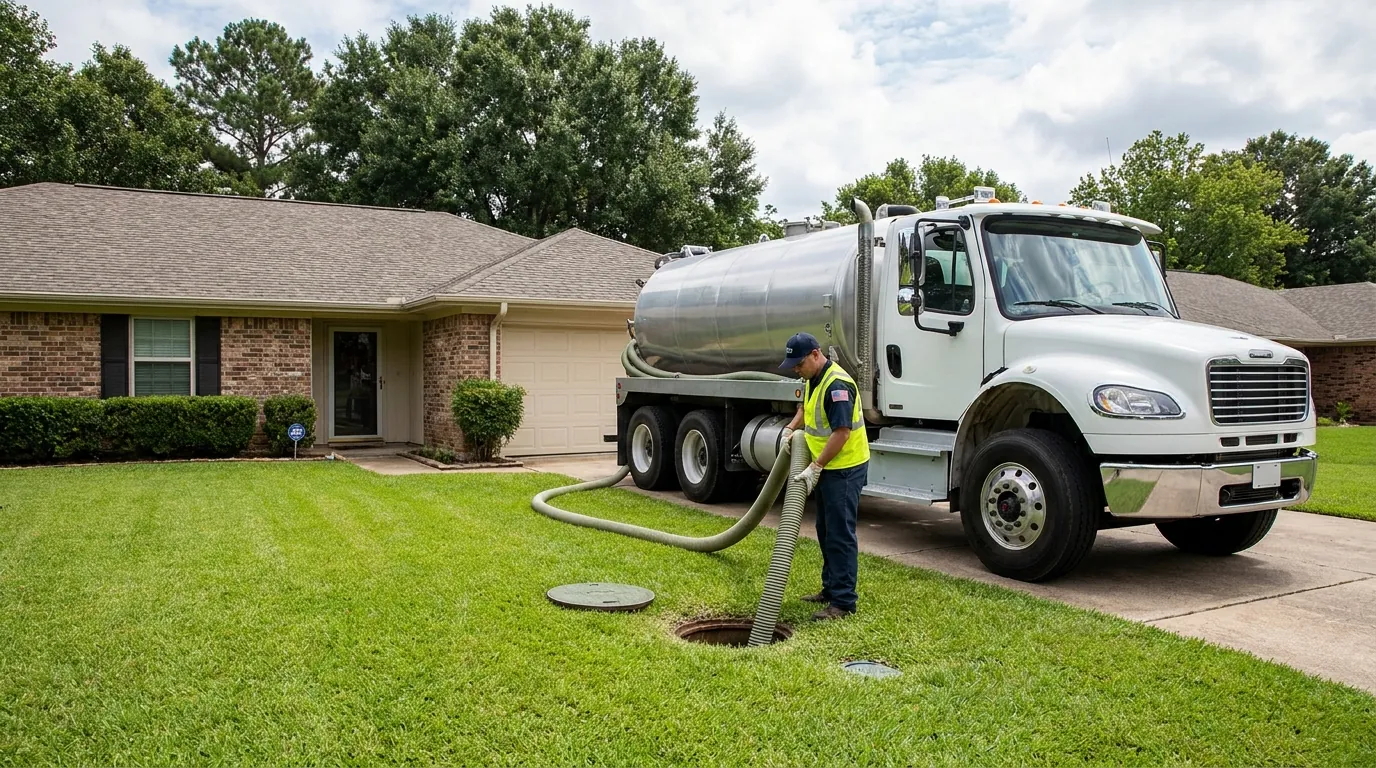
Why pumping matters here
Every septic tank fills with sludge on the bottom and a scum layer on top, and both keep building whether you notice or not. Regular septic tank pumping removes those layers before they reach the outlet baffle and start pushing solids into your drain field — the single most expensive part of the system to repair. Around Wichita, the clay-heavy soils that dominate the region drain slowly, so a field that gets fouled with solids has a hard time recovering.
If you are on a septic system in Wichita, Derby, Andover, or the smaller communities north of the city, pumping on a sensible schedule is the cheapest insurance you can buy for your system. This page explains what a pumping visit involves, how local conditions change the timing, and how to decide when yours is due. If you are seeing backups or slow drains right now, our septic emergency service is the faster route.
Warning signs your tank is due
The clearest sign is simply the calendar — most households land somewhere in the three-to-five-year range. Beyond that, watch for drains across the house that gurgle or empty slowly, sewage odors near the tank or drain field, and unusually green, spongy grass over the field even in dry stretches. Backups into the lowest fixtures in the house are a late warning that the tank is overfull or the outlet is blocked.
Rather than wait for symptoms, a quick septic system inspection can measure how full your tank actually is and set a realistic interval based on your household, not a rule of thumb.
What happens during a pumping visit
A straightforward septic tank pumping follows the same steps at nearly every property.
-
Locate and uncover the access lids
Both the inlet and outlet chambers are opened. If risers are installed, this is quick; older Wichita tanks may need the lids dug out by hand.
-
Measure sludge and scum
Depths are checked so you know how full the tank actually was and can plan the next interval based on real numbers, not a guess.
-
Pump the tank fully
The vacuum hose removes sludge and scum from both compartments. The tank is emptied through the manhole, not just the small inspection port, so the corners get cleared.
-
Inspect baffles and walls
With the tank empty, the inlet and outlet baffles, tank walls, and lids are checked for cracks or damage that would need repair.
-
Backfill and note the next date
Lids are resealed, the ground restored, and you get a recommended timeframe for the next pumping.
How Wichita soil and weather change the schedule
Pumping frequency is not the same everywhere, and local ground conditions are a big reason. The clay soils common across Sedgwick County percolate slowly, which means a drain field has less margin for error — solids that escape a neglected tank clog the soil pores quickly and are hard to reverse. That pushes a cautious homeowner toward more frequent pumping, not less.
The region's wide temperature swings and spring storms matter too. When the water table rises after heavy rain, a tank can appear to fill faster because groundwater slows how the field accepts effluent. If your household has grown, added a garbage disposal, or started running more laundry, your old interval may no longer hold. Ongoing septic tank cleaning and periodic checks keep buildup from getting ahead of you.
Ready to schedule a pump-out?
Call to book septic tank pumping in Wichita or any of the nearby towns we serve. We'll measure your tank, empty it fully, and tell you when to plan the next visit.
Serving Wichita, Bel Aire, Park City, Maize, Valley Center, Derby, and Andover.
Frequently asked questions
How often should a septic tank be pumped in Wichita?
Most households fall between three and five years, but the clay soils and household size in this area shift that range. A tank serving a large family or one with a garbage disposal may need pumping closer to every two to three years.
What does septic tank pumping cost?
Cost depends on tank size, how full it is, whether the lids are easy to reach, and access to the property. We measure and quote before work begins so there are no surprises; exact prices vary by job.
Does pumping fix a slow drain or backup?
Often it relieves the immediate problem, but not always. If a baffle has failed or the drain field is saturated, pumping buys time while the real cause is diagnosed and addressed.
Do you need to find my tank if I don't know where it is?
Yes. On older properties with no records, locating the tank and lids is part of the visit. Installing risers during a pump-out makes every future service faster and cheaper.