Grease Trap Pumping in Wichita
Grease trap pumping for Wichita-area kitchens. Full clean-outs, wall and baffle scraping, and a realistic pumping interval for your trap.
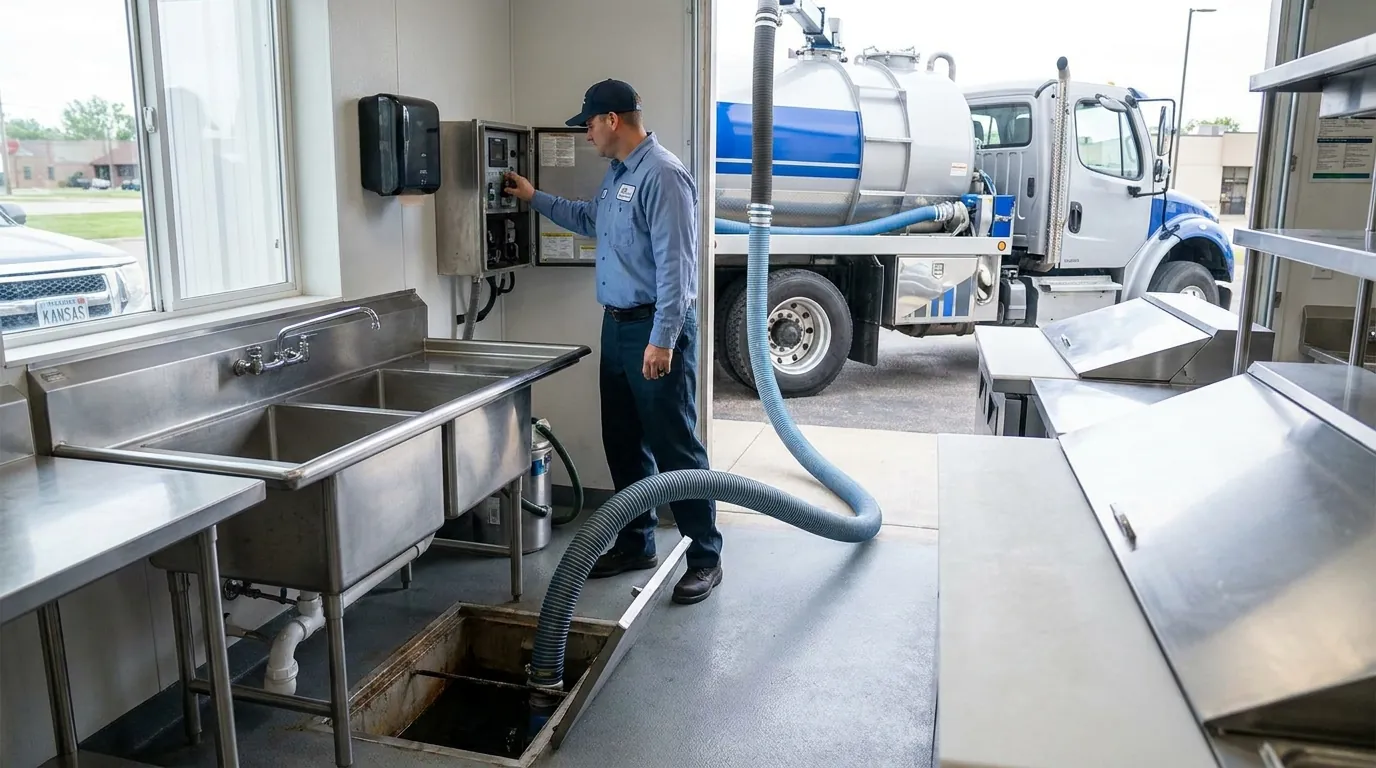
Why grease traps need regular pumping
A grease trap catches the fats, oils, and grease that would otherwise flow into your plumbing or septic system and harden into blockages. As the trap fills, that grease cap thickens and food solids settle in the bottom, and once the trap is full it stops doing its job — grease escapes downstream, drains slow, and odors build. Regular grease trap pumping keeps the trap working and protects everything past it.
For kitchens on septic, a well-maintained trap is doubly important: grease that reaches the tank speeds up buildup and can foul the drain field. Keeping the trap clear works hand in hand with routine septic tank pumping to keep the whole system healthy.
Signs the trap is overdue
Slow kitchen drains, gurgling, and a grease or sour odor near the trap are the usual warnings. If the grease cap has grown thick or solids fill much of the trap's depth, capacity is gone and grease is passing through. Many kitchens end up needing service more often than they expect once volume picks up.
If a neglected trap has already sent grease into a septic system, you may need a septic system inspection to check how far the problem has traveled before it reaches the tank or field.
What a grease trap pumping visit involves
The process clears the trap fully and checks it before returning it to service.
-
Open the trap
The lid is removed and the contents assessed — grease cap thickness and solids depth.
-
Pump the full contents
Grease, water, and settled food solids are vacuumed out completely, not skimmed.
-
Scrape the walls and baffles
Hardened grease on the interior surfaces and baffles is removed so capacity is fully restored.
-
Inspect and reseal
The trap and baffles are checked for damage, then the lid is resealed.
-
Recommend an interval
Based on how full the trap was, you get a realistic schedule for the next pumping.
Setting the right interval
How often a trap needs pumping depends on kitchen volume, menu, and trap size far more than on any calendar rule. A busy kitchen with a lot of fried food fills a trap quickly; a lighter operation goes longer between visits. Measuring how full the trap is at each service is the honest way to dial in the interval.
Simple habits stretch the time between pump-outs: scrape plates and pans before washing, keep oil out of the sink, and use strainers to catch food solids. When a trap does fill faster than expected, staying ahead of it is cheaper than clearing the blockages and odors a neglected trap causes downstream.
Book grease trap pumping
Keep your kitchen draining and your grease trap doing its job. Serving Wichita-area kitchens and homes with grease traps.
We'll measure the trap and set a realistic pumping schedule for your kitchen.
Frequently asked questions
How often should a grease trap be pumped?
It depends on kitchen volume, menu, and trap size rather than a fixed calendar. Busy kitchens may need service every few weeks; lighter ones go longer. We measure at each visit to set your interval.
What happens if a grease trap isn't pumped?
The trap fills, grease escapes downstream, and you get slow drains, blockages, and odors. On a septic system, that grease speeds up tank buildup and can foul the drain field.
Do you scrape the trap or just pump it?
We pump the full contents and scrape hardened grease off the walls and baffles so the trap's capacity is actually restored, not just skimmed off the top.
How can I make my trap last longer between pump-outs?
Scrape plates and pans before washing, keep cooking oil out of the sink, and use drain strainers to catch food solids. Less grease and solids in means longer between visits.