Septic Tank Pumping
Removing accumulated sludge and scum before solids can migrate toward the drain field. The core service most homes need every few years.
Wichita Septic Care
Straightforward septic tank pumping, cleaning, and inspection for homes across the Wichita area.
Serving Wichita, KS and the surrounding area.
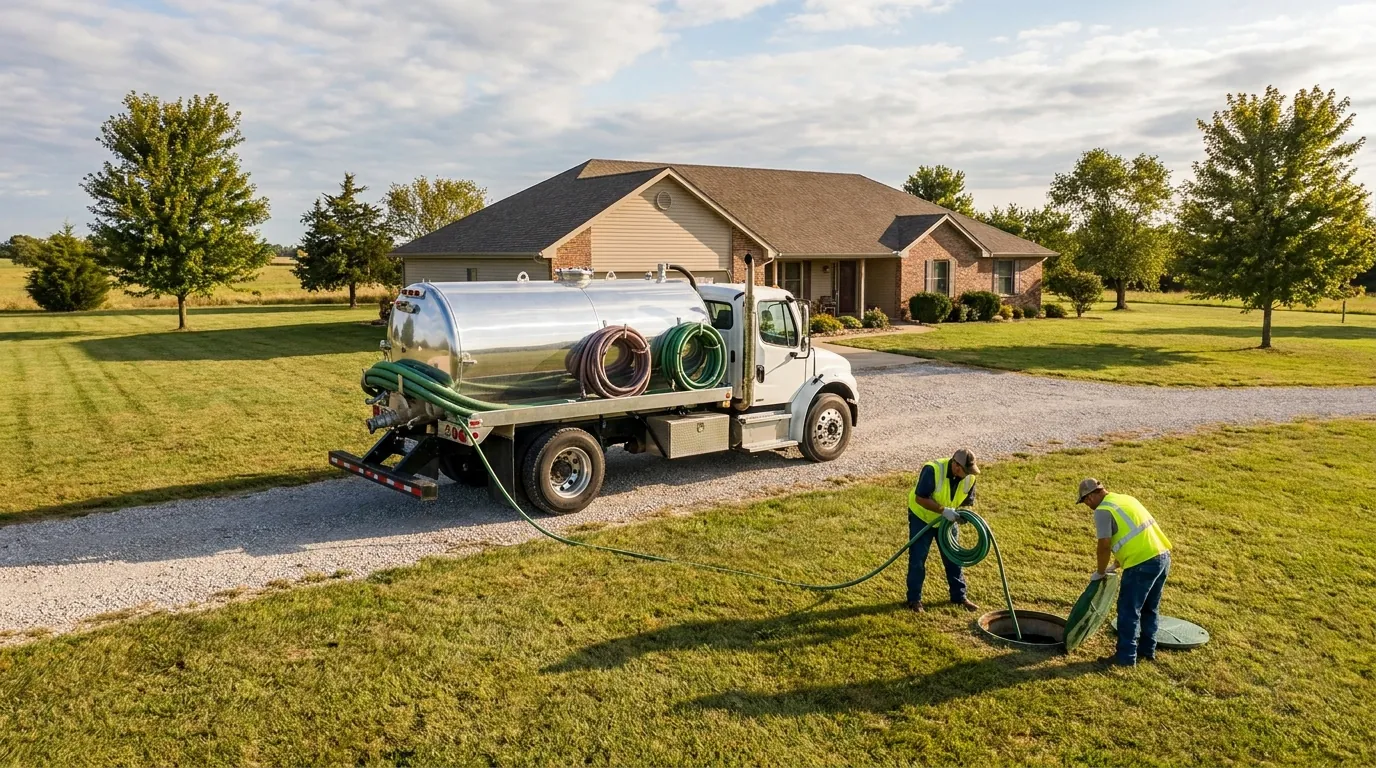
If your home outside Wichita's sewer lines runs on a septic system, you already know the tank does its work quietly until it doesn't. Wichita Septic Care focuses on the routine that keeps a system healthy: pumping the tank on a sensible schedule, cleaning out settled solids, and inspecting the parts that fail long before a backup reaches the house. This site is for homeowners in Wichita and the surrounding towns who want a clear explanation of what their system needs and when.
Septic performance in south-central Kansas is not the same as it is elsewhere. The clay-heavy soils common around Sedgwick County drain slowly, which changes how a drain field handles the water leaving your tank. Wide temperature swings stress tank components and pipe joints across a single year, and the spring storms that roll through the region can raise the local water table enough to slow a system that worked fine in a dry August. All of that feeds into one practical question: how often should you pump, and what should you watch for in between?
Whether you have a new build near Maize or an older home on an acreage toward Andover, the goal is the same — keep solids from ever reaching the drain field, because that is the failure that gets expensive. Regular septic tank pumping is the cheapest insurance a septic owner has.
Septic systems live or die by soil percolation and the depth of the water table, and both vary sharply across the Wichita area. The clay soils that dominate much of Sedgwick County hold water rather than letting it move quickly through the ground. A drain field built in that clay accepts effluent more slowly than one in sandy loam, so the same amount of household water sits longer in the trenches. When the tank is overdue for pumping and solids start carrying over, that slow-draining soil clogs faster and is far harder to recover.
Spring is the pressure test. The storms that come through in April and May can saturate the ground and lift the seasonal water table, and a high water table crowds the drain field from below. During those weeks a marginal system may gurgle, drain slowly, or push odors up through the yard even though nothing about the tank changed — the ground simply has nowhere to put the water. Pumping ahead of the wet season, rather than during it, keeps the tank's capacity available when the soil can least afford extra load.
Winter brings the opposite stress. Hard freezes and the wide temperature swings typical of Kansas can heave shallow pipe and stress tank lids and risers. Systems that are pumped and inspected before winter tend to make it through with fewer surprises. Across all of it, the deciding factors are your household size, tank size, and how much water and solid waste the system handles — which is exactly what a septic system inspection helps you understand for your specific property.
Every service below is described in plain terms on its own page, including the warning signs, the steps involved, and how local conditions change the work.
Removing accumulated sludge and scum before solids can migrate toward the drain field. The core service most homes need every few years.
Checking baffles, tank levels, and drain field signs to catch small problems and guide septic system repair before they grow.
A more thorough clean than a routine pump-out, clearing hardened solids and buildup from the tank walls and floor.
Addressing the soggy ground, slow drains, and odors that point to a struggling drain field in clay-heavy soil.
Pumping and cleaning grease traps for homes and small kitchens where fats and oils would otherwise choke a system.
Help when a tank is backing up, alarms are sounding, or sewage is surfacing and you need it handled quickly.
Wichita Septic Care serves Wichita and nearby communities where homes rely on septic systems, including these towns.
Most households land somewhere in the every-three-to-five-year range, but the right interval depends on tank size, how many people live in the home, and how much water and waste the system handles. Clay-heavy soils and a high spring water table make staying on schedule more important here, since an overdue tank clogs a slow-draining field quickly.
Slow drains throughout the house, gurgling in the plumbing, odors near the tank or drain field, and unusually lush or soggy grass over the field are the common early signs. If sewage is backing up indoors, treat it as urgent and stop adding water to the system.
Yes. Along with Wichita, we serve nearby communities including Bel Aire, Park City, Maize, Valley Center, Derby, and Andover, where many homes on acreage rely on septic systems.
Yes. If a tank is backing up, an alarm is sounding, or sewage is surfacing in the yard, our septic emergency service page explains what to do and how to get help quickly.
Tell us your tank size, roughly when it was last pumped, and any symptoms you're seeing. We'll help you sort out what your system needs next.
Serving Wichita and the surrounding towns.
Practical answers to the questions we hear most in Wichita, KS.
What affects septic tank pumping cost in Wichita, KS — tank size, sludge depth, access, and local soil conditions — plus how to plan and avoid surprises.
How often should you pump a septic tank in the Wichita area? Household size, tank size, and local clay soil all matter. A practical schedule guide.
Slow drains, gurgling, odors, and soggy yard spots are warning signs your Wichita septic tank is full. Learn what each symptom means and what to do.