Septic Tank Cleaning in Wichita
Septic tank cleaning in Wichita and nearby towns. We clear hardened sludge and scum a routine pump-out leaves behind, and check the tank while it's empty.
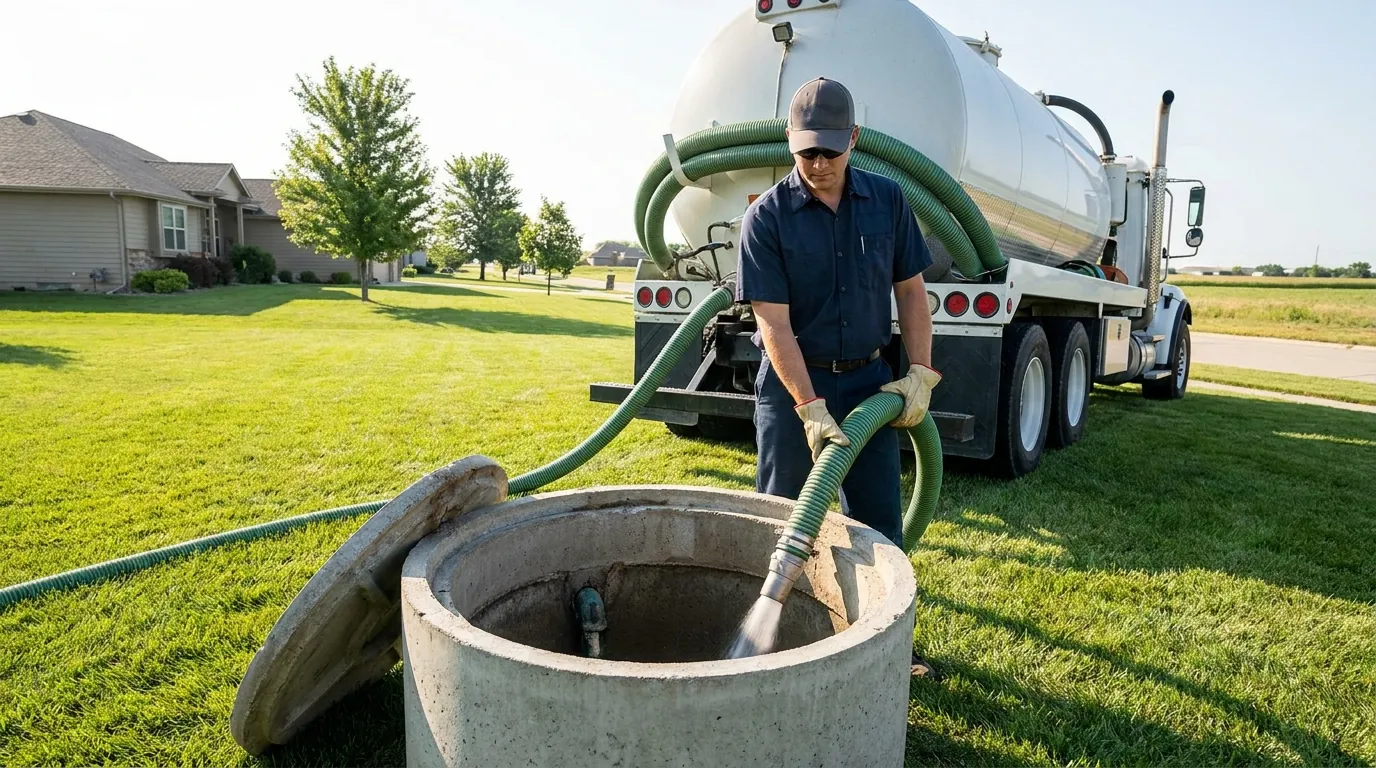
Cleaning versus pumping
People use "pumping" and "cleaning" interchangeably, but there's a real difference. Pumping draws out the liquid and the loose sludge. Cleaning a septic tank goes further — it breaks up and removes the hardened sludge packed on the bottom and the crust that forms on top, the material a fast pump-out often leaves behind. Over years, that compacted layer shrinks the tank's working volume and pushes solids toward the outlet sooner.
If it's been a long time since the tank was serviced, or a previous visit only skimmed the liquid, cleaning restores the tank closer to its true capacity. It pairs naturally with routine septic tank pumping and is often recommended after a septic system inspection finds heavy buildup.
Signs your tank needs a full cleaning
Recurring slow drains soon after a pump-out, a tank that seems to fill unusually fast, or an outlet that keeps passing solids all point to buildup a standard pumping isn't reaching. Strong odors that linger and a scum crust thick enough to see when the lid comes off are other tells.
Because Wichita's clay soils give a drain field little margin, letting solids escape a partly cleaned tank is worse here than in loose, fast-draining ground. Clearing the tank fully protects the field and, if the field is already struggling, keeps it from getting worse while you weigh drain field service.
How septic tank cleaning is done
Cleaning adds steps beyond a standard pump-out to clear compacted material.
-
Pump the liquid and loose sludge
The tank is first drawn down the way a normal pumping would empty it.
-
Break up the hardened layer
The compacted sludge at the bottom and the scum crust on top are agitated so they can be lifted out.
-
Remove residual solids
The loosened material is vacuumed out, leaving the tank cleared back toward its walls and floor.
-
Rinse and check
Interior surfaces and baffles are rinsed and examined so nothing is hidden under remaining sludge.
-
Reseal and advise
Lids are resealed and you get guidance on how to keep buildup from hardening before the next visit.
Keeping buildup from coming back
How fast a tank re-accumulates hardened solids depends on what goes down the drain and how often the tank is serviced. Grease, wipes, coffee grounds, and heavy garbage-disposal use all speed up the layer that cleaning removes. Spacing out laundry and dishwasher loads gives solids time to settle instead of washing toward the outlet.
The most reliable protection is a regular service interval so the tank never gets far enough behind to need aggressive cleaning. Around Wichita, where slow clay soils punish any solids that reach the field, staying ahead is well worth it. We'll set a realistic schedule based on what we find in your tank.
Schedule septic tank cleaning
Book a full cleaning to clear hardened sludge and restore your tank's capacity. Serving Wichita and nearby communities.
Cleaning is often best paired with a same-visit inspection while the tank is empty.
Frequently asked questions
Is septic tank cleaning different from pumping?
Yes. Pumping removes liquid and loose sludge; cleaning also breaks up and removes the hardened bottom sludge and scum crust that a quick pump-out leaves behind, restoring more of the tank's capacity.
How do I know if I need cleaning rather than routine pumping?
If drains slow again soon after a pump-out, the tank fills fast, or an inspection finds thick compacted layers, a full cleaning is usually the right call.
Can cleaning damage the tank?
No. Breaking up hardened solids and rinsing surfaces is standard practice. It's also a chance to inspect baffles and walls that are otherwise hidden under sludge.
How can I slow buildup after cleaning?
Keep grease, wipes, and coffee grounds out of drains, go easy on the garbage disposal, spread out laundry loads, and stay on a regular service interval.