Drain Field Service in Wichita
Drain field service in Wichita and nearby towns. We diagnose surfacing, odor, and soggy ground, relieve the load, and give you honest options.
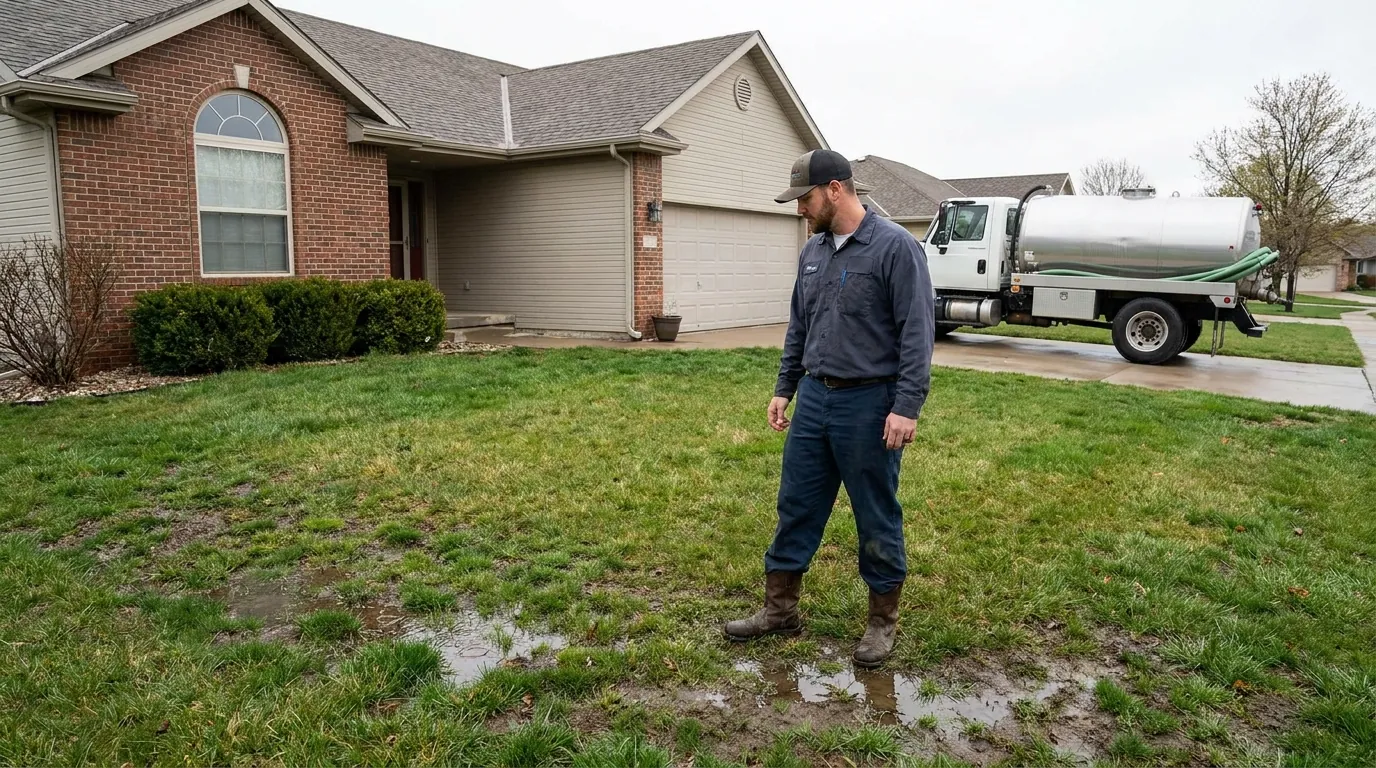
The most expensive part to lose
The drain field is where effluent from the tank soaks into the soil, and it's the costliest part of a septic system to replace. When it starts to fail, you may see soggy or spongy ground over the field, unusually lush grass, sewage odors outside, or slow drains and backups in the house even after the tank has been pumped.
In the Wichita area, the clay-heavy soils that dominate the region drain slowly to begin with, so a field here has less spare capacity than one in sandy ground. That makes early diagnosis important — catching a stressed field before it fails outright can be the difference between relieving the load and replacing the whole field.
Why fields fail here
Most field problems trace back to one of a few causes: solids that escaped a neglected tank and clogged the soil, a water table that rises after heavy rain and leaves the soil no room to accept more effluent, or a field simply overloaded by more water than it was sized for. Each has a different answer, which is why diagnosis comes before any fix.
A neglected tank is the most preventable cause. Regular septic tank pumping keeps solids where they belong, and a septic system inspection can confirm whether the tank is the real culprit before anyone touches the field.
How we approach a drain field problem
Field trouble takes diagnosis first — the fix depends on the cause.
-
Rule out the tank
A full tank or failed baffle can mimic field failure. We confirm the tank is clear before pointing at the field.
-
Assess the field
The field area is walked and evaluated for surfacing, odor, saturation, and how recent weather is affecting it.
-
Identify the cause
Whether it's solids that clogged the soil, a saturated water table, or an overloaded field, the cause drives the solution.
-
Relieve the load
Pumping and reducing water use can give a stressed field time to recover, especially after wet weather passes.
-
Advise on longer-term fixes
Where the field is failing structurally, you get straight information on what restoring or replacing it would involve.
How Wichita weather plays in
Spring storms and a rising water table are the drain field's toughest test around here. When the ground is saturated, the soil can't accept effluent at its normal rate, and a field that's fine in dry weather can back up during a wet stretch. Sometimes the best move is to relieve the system and reduce water use until conditions ease, then reassess.
Wide temperature swings and the freeze-thaw cycle also work on shallow field lines over time. If you keep seeing wet ground or backups, don't wait for the field to fail completely — an early look, paired with prompt septic emergency service when things back up, protects the most expensive part of your system.
Have a soggy field or repeat backups?
Get a straight diagnosis of what's happening in your drain field and honest options for what to do next. Serving Wichita and surrounding towns.
We rule out the tank first so you don't pay for the wrong fix.
Frequently asked questions
How do I know if my drain field is failing?
Common signs are soggy or spongy ground over the field, unusually green grass, outdoor sewage odor, and backups that continue even after the tank is pumped. A field assessment can confirm the cause.
Can a failing drain field be saved?
Sometimes. If the cause is a full tank or a temporary saturated water table, relieving the load and reducing water use may let the field recover. A field clogged with solids or failing structurally is harder to reverse.
Why does my field back up only after heavy rain?
When Wichita's clay soils and water table saturate after storms, the soil can't absorb effluent at its usual rate. Reducing water use until the ground dries often helps, but repeated backups signal a field that needs attention.
Does pumping the tank fix a bad field?
Pumping helps by removing solids and relieving pressure, and it often buys time. But it doesn't restore soil that's already clogged. We diagnose the field so you know whether pumping alone is enough.