Septic Emergency Service in Wichita
Septic emergency service in Wichita and nearby towns. Fast help for backups and overflows — we relieve the system, find the cause, and plan the fix.
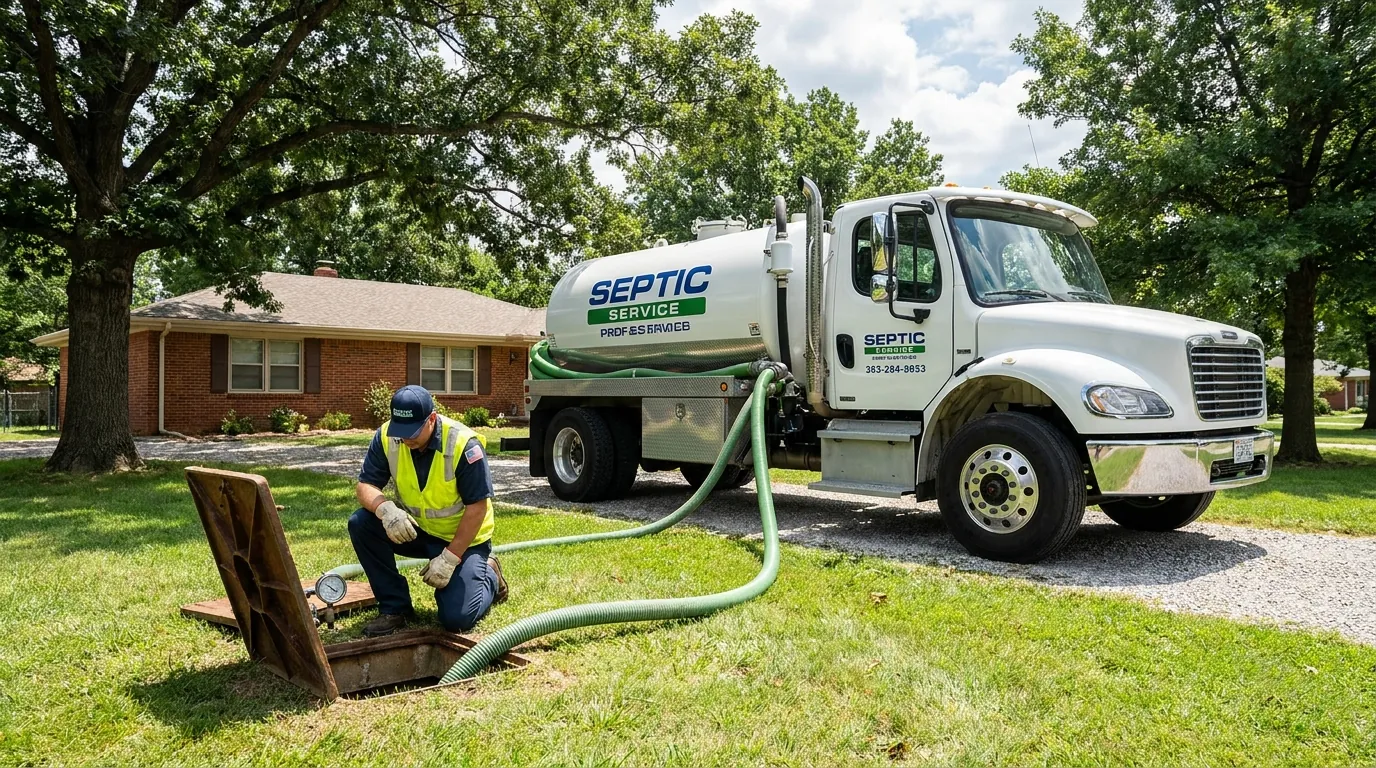
When a septic problem can't wait
Some septic problems are urgent: sewage backing up into the lowest drains or toilets in the house, wastewater surfacing in the yard, or drains across the home stopping all at once. These are health hazards and property risks, and they get worse with every gallon of water added. Septic emergency service exists to relieve the system quickly and stop the damage.
A backup usually means the tank is overfull, the outlet is blocked, or the drain field can't accept effluent — often after heavy rain saturates the ground. The fastest way to stop it is to open and pump the tank, which is why a backup and septic tank pumping go hand in hand.
What causes a sudden backup
The common culprits are a tank that's overdue, a failed inlet or outlet baffle dropping debris where it blocks flow, a clog between the house and the tank, or a drain field that's saturated and can't drain. Wichita's spring storms and clay soils make the saturated-field scenario especially common — when the water table rises, a field that's fine most of the year can back the system up.
Once the immediate emergency is relieved, finding which of these caused it matters, because the long-term fix is different for each. A follow-up septic system inspection or, where the field is involved, drain field service turns a one-time crisis into a lasting solution.
What to do — and what we do
A few quick steps at home, then prompt work to relieve the system.
-
Stop adding water
Hold off on laundry, dishwashers, and extra flushing. Every gallon you add makes the backup worse while help is on the way.
-
Keep people away from the sewage
Raw sewage is a health hazard. Keep children and pets clear of backed-up drains and any pooling in the yard.
-
We locate and relieve the system
On arrival, the tank is opened and pumped to relieve pressure and stop the backup as quickly as possible.
-
We find the cause
Once the immediate problem is under control, we check whether it's a full tank, a blockage, a failed baffle, or a saturated field.
-
Plan the real fix
You get clear next steps so the emergency doesn't simply repeat the next time it rains.
Why Wichita emergencies spike after storms
The single biggest driver of septic emergencies in this region is heavy rain on top of clay soils. When the ground saturates, the drain field loses its ability to absorb effluent, and even a healthy system can back up until conditions dry out. Homes across Derby, Valley Center, and the outlying areas see this pattern every wet spring.
The best defense is not waiting for the water to come up through the drains. Staying current on septic tank pumping and knowing your system's condition through a septic system inspection means fewer surprises when the next storm rolls through.
Dealing with a backup right now?
Call for septic emergency service in Wichita and the surrounding towns. Stop adding water, keep everyone clear of the sewage, and we'll relieve the system as fast as we can.
Serving Wichita, Bel Aire, Park City, Maize, Valley Center, Derby, and Andover.
Frequently asked questions
What counts as a septic emergency?
Sewage backing up into the house, wastewater surfacing in the yard, or all drains stopping at once are emergencies. They're health hazards that worsen quickly, so they shouldn't wait.
What should I do while I wait for help?
Stop adding water — no laundry, dishwashers, or extra flushing — and keep children and pets away from any backed-up drains or pooling sewage. Reducing water use slows the backup.
Will pumping alone fix the emergency?
Pumping relieves the immediate backup, but the lasting fix depends on the cause. A blocked outlet, failed baffle, or saturated drain field each needs different follow-up, which we identify once the system is relieved.
Why do backups happen after heavy rain?
When Wichita's clay soils and water table saturate after storms, the drain field can't absorb effluent and the system backs up. Staying current on pumping and inspection reduces the risk.