Septic System Inspection in Wichita
Septic system inspection in Wichita and nearby towns. We measure your tank, check baffles and the drain field, and flag septic system repair needs.
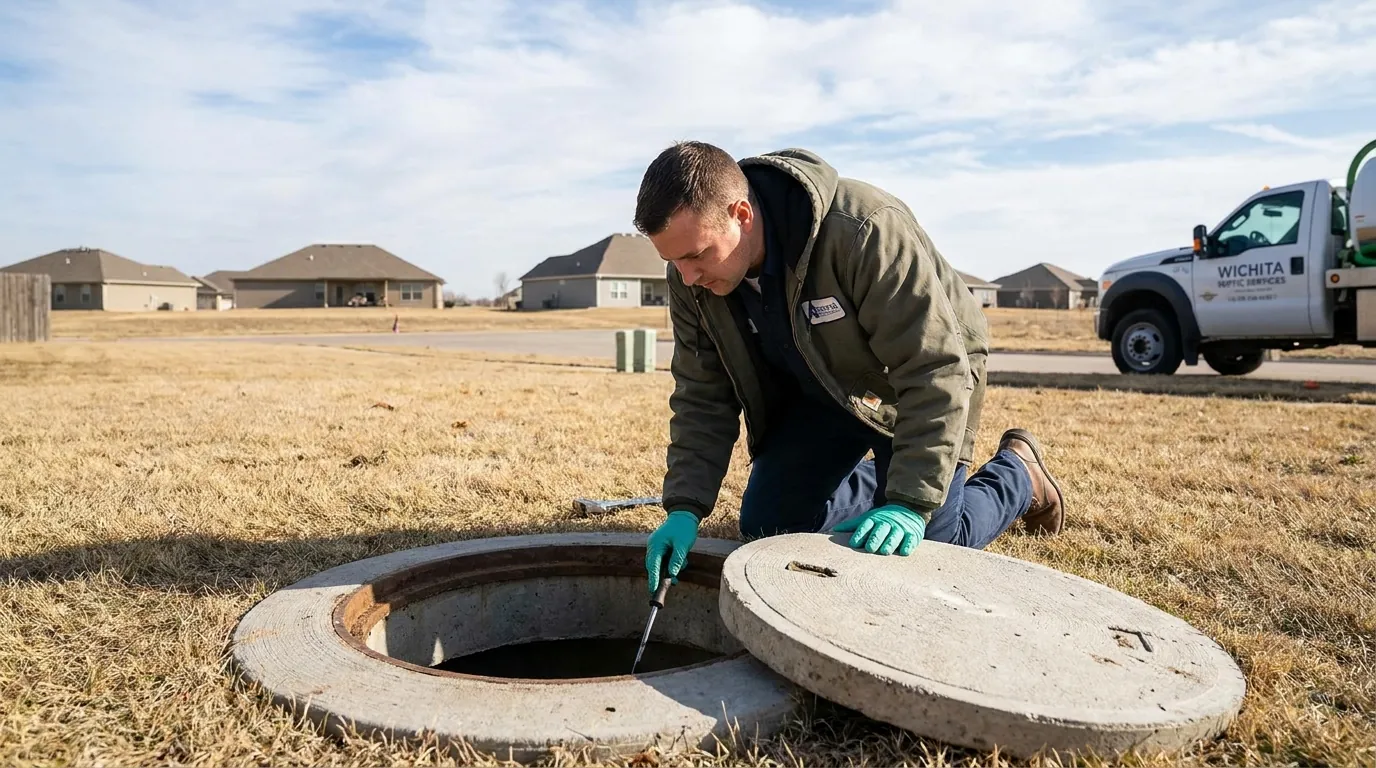
What an inspection tells you
A septic system inspection answers the questions you can't see from the yard: how full the tank is, whether the baffles are intact, whether solids are escaping toward the drain field, and how the field itself is holding up. It's the right first step before buying a home on septic, after a backup, or simply when you've lost track of when the system was last serviced.
Inspections also catch septic system repair needs early. A cracked baffle or a corroded lid is cheap to fix on its own; the same problem ignored can send solids into the field and turn into a repair that costs many times more. If the inspection shows the tank is due, we can move straight into septic tank pumping the same visit.
When homeowners should schedule one
Book an inspection if you're buying or selling a Wichita-area home on septic, if you've noticed slow drains or odors, or if it's been several years and you're unsure of the system's history. Growth around Andover, Derby, and Maize means many homes changing hands sit on systems whose age and layout aren't documented, and an inspection replaces guesswork with facts.
It's also smart after a stretch of heavy spring rain. Saturated ground stresses a drain field, and an inspection can tell you whether what you're seeing is a temporary weather effect or the start of a real problem worth drain field service.
How the inspection works
Inspections follow a consistent order so nothing gets skipped.
-
Locate the system
Tank, lids, and field lines are located. Older Wichita-area properties sometimes have no clear records, so this step can take extra care.
-
Open and measure
Access lids are opened and sludge, scum, and liquid levels are measured in both chambers.
-
Assess components
Baffles, walls, and lids are examined for damage, and the outlet is checked for solids carryover.
-
Evaluate the field
The drain field area is walked and assessed for surfacing, odor, and soggy ground.
-
Report and recommend
You get a plain-language summary of condition and what, if anything, to repair, clean, or pump next.
Why local conditions change what we look for
The clay-heavy soils around Wichita drain slowly, so an inspection here pays extra attention to whether solids have already reached the field and to how well the soil is accepting effluent. A field that would shrug off a little overload in sandy ground can be pushed into failure much sooner in tight clay.
Wichita's wide temperature swings and wet springs also shape the reading. A field that looks marginal right after storms may recover as the water table drops, while true failure won't. Part of the value of an inspection is telling those two apart so you don't pay for repairs you don't need — or ignore ones you do.
Book a septic system inspection
Get a clear, honest read on your system's condition and any septic system repair it needs. Serving Wichita and the surrounding communities.
Ask about pairing an inspection with pumping to save a trip.
Frequently asked questions
How long does a septic inspection take?
A standard inspection usually takes under an hour once the lids are accessible. Locating a buried or undocumented tank on an older property can add time.
Will an inspection tell me if I need septic system repair?
Yes. We check baffles, walls, lids, and the outlet for damage and note anything that needs repair, along with how urgent it is. You get plain-language findings, not a sales pitch.
Should I inspect before buying a home on septic?
Absolutely. Many Wichita-area homes have systems with unknown history, and an inspection tells you what you're actually buying before you close.
Do you pump the tank during an inspection?
Not automatically. We measure first; if the tank is due, pumping can be done the same visit so the interior and baffles can also be checked with the tank empty.